The origins of Oxymore
The story, the origins and the intentions. — 13 October 2026
A life guided by scent
I have always been drawn to and passionate about smells. My nose shapes so much of how I experience the world around me, my relationships with others and my relationship with myself. My olfactory memories are vivid, and my brain has held on to as many bad ones as good ones. They guide my instinctive responses of attraction and rejection every day.
Like everyone, I have many scent memories. Some have left a particularly happy impression: warm milk with vanilla, white school glue, frangipane and orange blossom. Monoi, the sea, the sunscreens of years gone by. Damp earth, freshly cut grass, wood fires and toast.
Then there are spices, cakes baking in the oven, the markets of Provence or Marrakech, the gardens of La Mamounia… Smells that take me straight back to a place, a season, a feeling.
Others repel me just as strongly. Especially what I think of as “cloying”: a sweetness so heavy that it can become nauseating. I sometimes find it in a perfume, sometimes in burning resin. I am drawn to sweetness, but not every kind of sweetness.
And then there are my earliest perfume memories. My mother’s: Shalimar, Vol de Nuit and Mitsouko by Guerlain. They belonged to a mother looking lovely, dressed and made up, ready to go out, who would come and kiss me while I was still half asleep. For a long time, I associated those trails of scent with femininity itself.
My father wore Vétiver by Guerlain, almost only on Sundays. And Habit Rouge was the scent of my oldest friend’s mother, before my friend went on to wear it herself for years.
In a word. Guerlain.
Perfume became something of an inevitability for me. I soon developed a curiosity about it, a real desire to know more, to learn and discover, to understand the choices, recognise the materials and accords, and examine every discovery closely. To the point of obsession.
Choosing one each evening, putting it on my wrist, smelling it as I fall asleep and again when I wake, mentally noting my impressions. Choosing another for the day and following the same ritual. Adopting one more than the others, or several to suit the day’s changing moods.
Working at Chanel Fragrance & Beauty for six years alongside my studies, with many training sessions at the Chanel school, helped me go beyond my instincts and natural preferences. There I discovered the history, the making, the craftsmanship, the meticulous choice of materials, the care in every gesture, the importance of time, the manufacturing processes and so many other mysteries for someone who, until then, had simply been an enthusiastic consumer.
Becoming a perfumer myself never crossed my mind. And even if it had… I was studying law and then marketing, with little natural talent for chemistry or attraction to laboratories.
But continuing my endless search for the perfect perfume — which seems to move further away the more you look for it — and nurturing the dream of a project built around fragrance: that never left me.
I did not imagine it as a job, but as a personal passion. Something deep inside that makes me smile, lets me see sunshine on rainy days, gives me desire, momentum, strength…
The perfumes I love
Before Oxymore, and still today, there are other people’s perfumes. Those I wear, those I love to smell, those I admire. Here are just a few examples of the discoveries that have shaped my sense of scent.
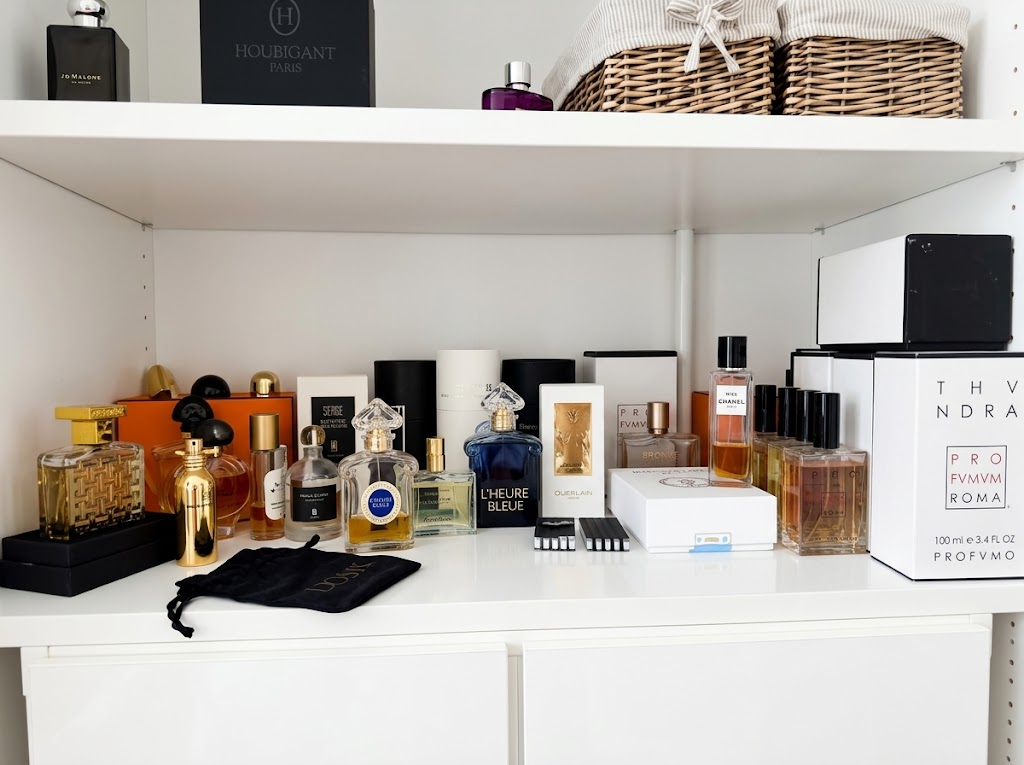
There are the classics: Shalimar and L’Heure Bleue by Guerlain, and more broadly that distinctive signature, the Guerlinade. Chanel’s N°22 too, and Opium by Yves Saint Laurent, which I do not wear but greatly admire.
Then come the less widely known vanillas: Vanitas and Confetto by Profumum Roma, as well as Gioiosa, one of my favourites from the house. Vanilla Dry by 1907, Sylvaine Delacourte’s vanilla creations, Tihota by Indult… And discoveries in oil form, such as Himalayan Musk and Vanilla Musk by Nemat.
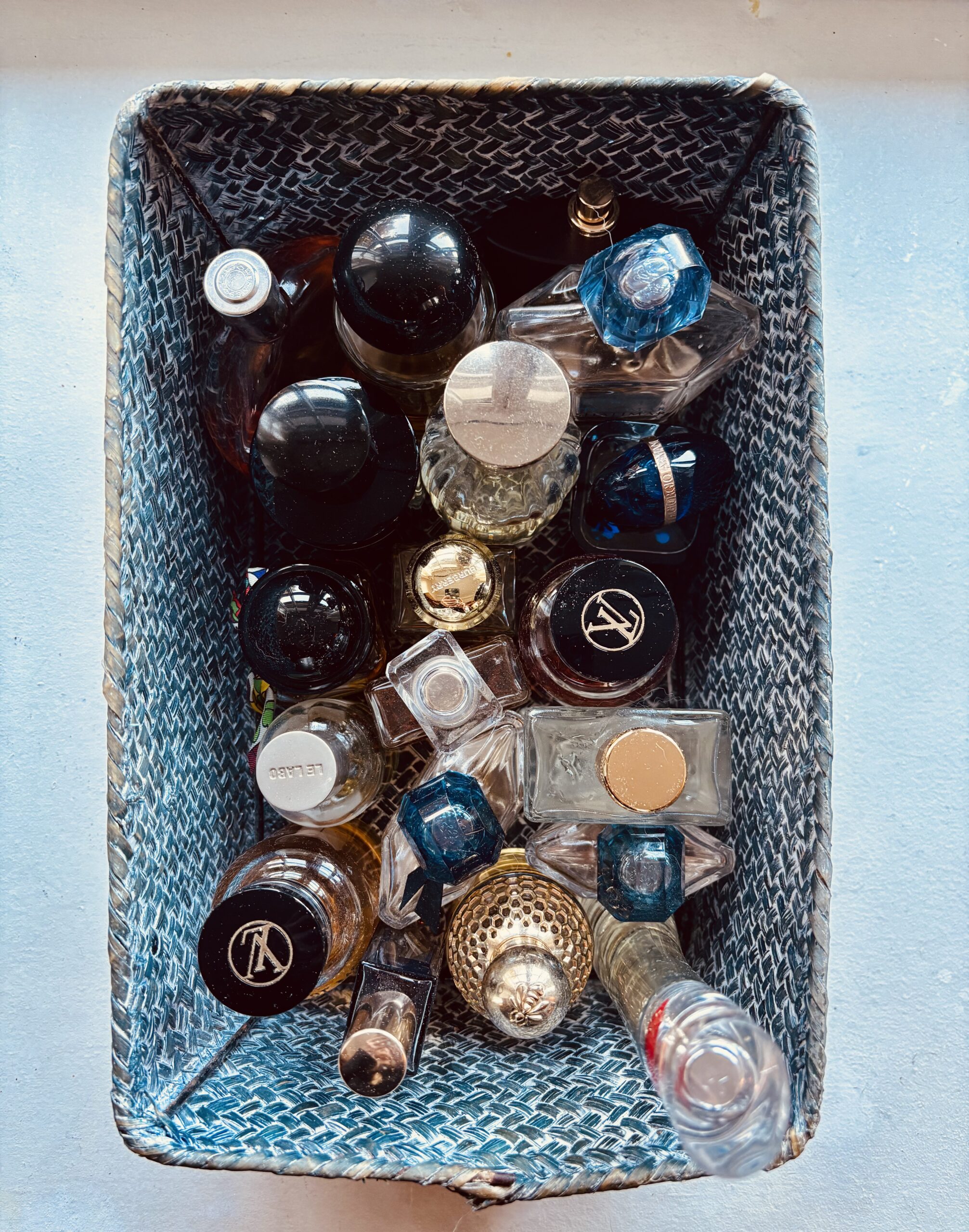
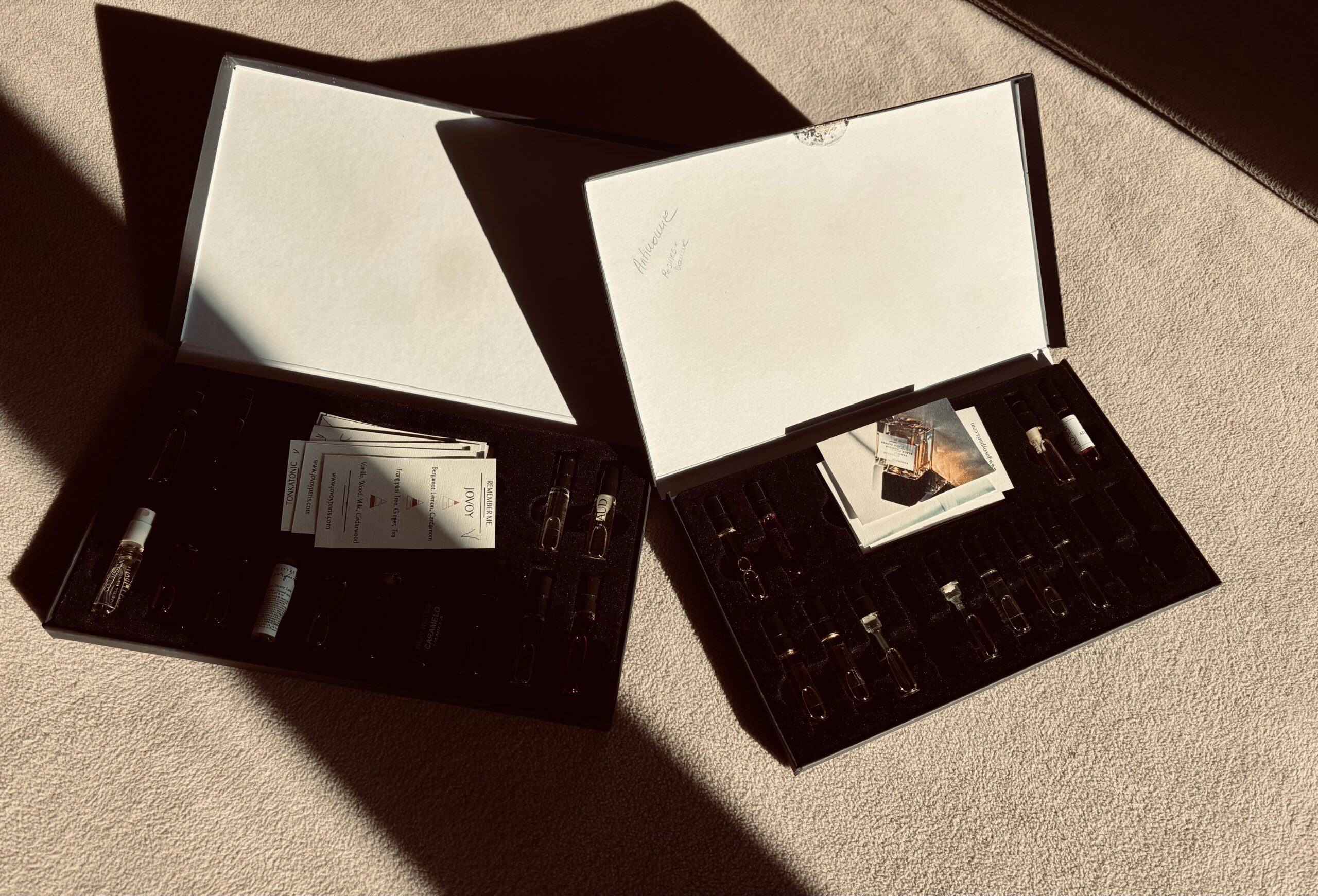
Perfectly comforting, quietly seductive companions.
I also love smelling and wearing fragrances described as masculine or unisex: Musc Ravageur by Frédéric Malle, which I find magnificent; Thundra by Profumum Roma, which evokes the earth at the moment of “creation” for me, and is utterly addictive; Ambre des Abysses by Houbigant, which completely enchants me. And on my partner, I love certain Acqua di Parma colognes, particularly their soft, spicy nuances.
And then there is incense! In vanilla and powdery accords, paired with softer notes, as in Vanille Carbone by Atelier Materi or Vanilla Black Pepper by BOHOBOCO, which I find magical. Or in expressions that feel more raw to me, at Chapel Factory or in Eau Égyptienne by Cinq Mondes.
My tastes often lean towards oriental fragrances, soft or dry, vanilla or earthy, sometimes green or resinous. I am also occasionally drawn to chypres, such as Aromatics Elixir by Clinique.
What I seek is a sense of clarity, of purity in the scent. It can be powerful, leave a generous trail, be soft and deep, spicy and opulent. But that clarity has to be there for me.
By contrast, accords that feel overloaded, too animalic or cloying can quickly become overwhelming for me. These are deeply personal perceptions: what repels me may delight someone else.
I love depth, presence and character. And a softness that leaves room to breathe.
Then one day, creating
Then one day, after years of searching, discovering, testing and buying dozens of perfumes, creating one myself suddenly seemed a natural and exciting path.
So I began writing the project. Which perfumes, which material, which ritual? Which emotion, which moment, which mood? With whom: which perfumer, an independent, a company, craftspeople, artists? And then, more practically, but much later: for whom, when, where, with what packaging, distribution, price, funding and business plan?
Some of those last questions remain unanswered. But there is no rush. I focused on my passion and what felt like the greatest world still to explore — neither marketing nor launching a project in itself, nor even setting up a business.
But perfume.
So my first months of work centred on the concept, the value proposition and, above all, the materials and the principal notes.
The origins of a name, the birth of an idea
I initially used a working name for the project: Oxymore Olfactif. An explicit translation of a literary concept into perfumery. It soon became… Oxymore. But certain complications, now on their way to being resolved, led me to develop the name into Oxymore.Paris. A reference to where the creation began. A brand name that also clearly gives its web address.
If I had to sum up the concept in a few words, it would be perfumes built around a beautiful, opulent yet dry vanilla. Through its distinctive prism — softness, purity, tenderness — an apparent olfactory opposite emerges: a vertical thread of spice, earth, incense… Oxymore.Paris brings together scents that might seem contradictory. So vanilla is never dull, and spices are always comforting enough.
The range of seven accords is arranged into three triptychs, each built around the same Vanille Origine and two other interpretations, offering several moods for a single soul.
Oxymore.Paris does not choose sides when it comes to gender. Freedom and diversity are central. We are not all rigidly defined, one-dimensional beings when it comes to perfume…
Finally, Oxymore.Paris will develop eaux de parfum, oil and mist to enrich a fragrance ritual that welcomes harmonious combinations of notes and textures within the range.
Getting to know the materials
As I defined and refined the concept, the foundations of the offering and my own wishes, I ordered raw materials to make my own tests, then prototypes and their formulas, by hand, in a small studio I set up in the countryside. Close to nature and quiet, in our much-loved family home, where we spend at least every weekend.
I ordered all these materials from a professional in Grasse: Parfum Cosmetic World (PCW), a fragrance creator and producer as well as a worldwide supplier and distributor of raw materials. A company clearly rooted in the local perfume industry, whose expertise needs no introduction.
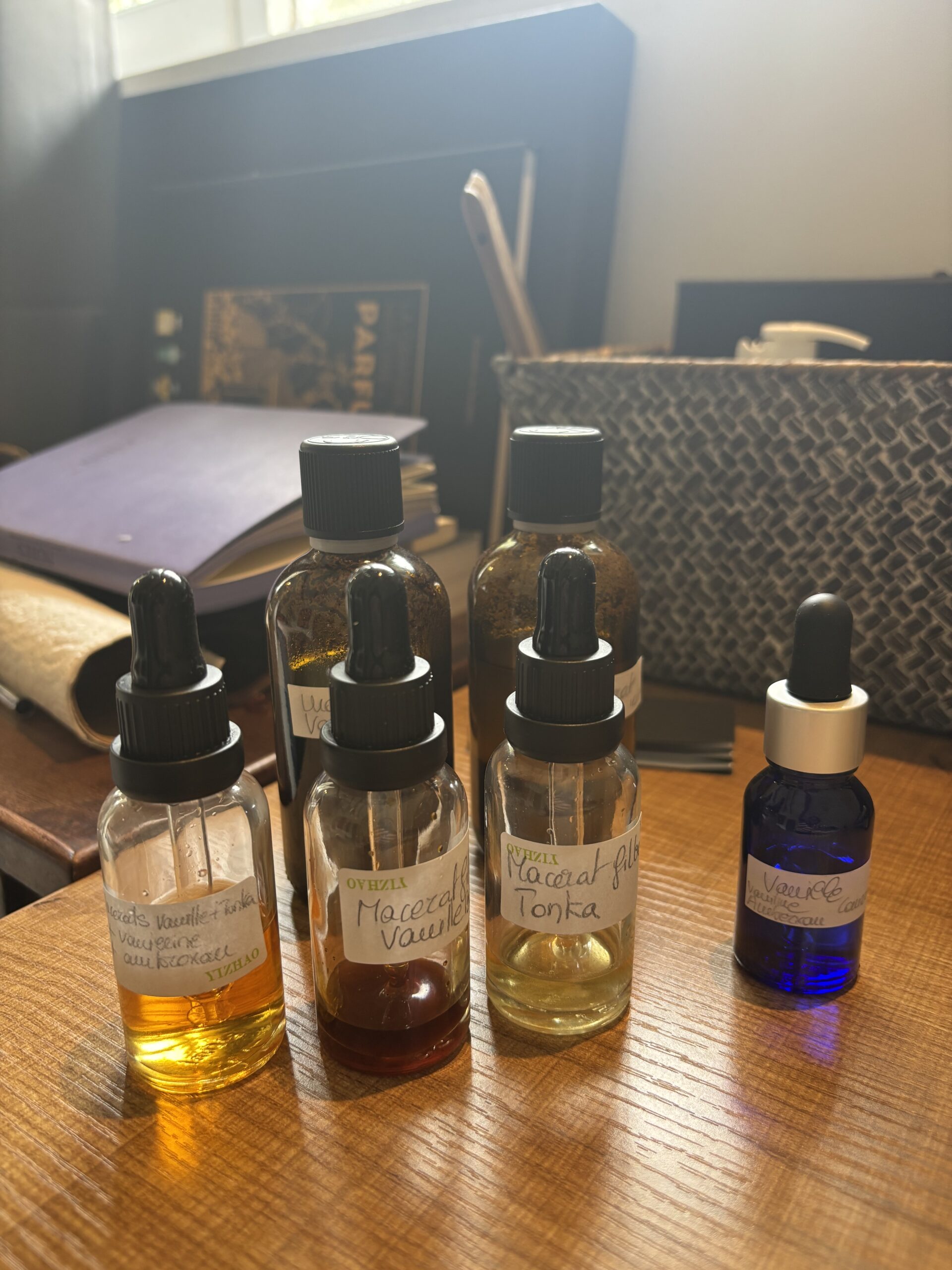
There were around sixty materials, each chosen carefully, though sometimes with considerable hesitation. Some notes I love without knowing their names; others I thought I knew but only truly discovered by working with them. Still others I could never have imagined arriving as a powder, a resin, crystals or some indefinable viscous substance…
I had to take time to get to know them and learn to handle them. I read a great deal… Relying on the expertise and experience of established professionals reassured me, but it also kept me from taking action. I had to begin. And that was very intimidating.
So I started bringing those long-awaited oxymorons to life. Beginning with Vanille Origine, then trials with a bouquet of materials such as incense, balsams and resins. Next I tried combinations with peppery or warm spices, repeating the exercise a thousand times until I had the most developed prototypes I could make, with formulas recorded as precisely as possible, down to the milligram.
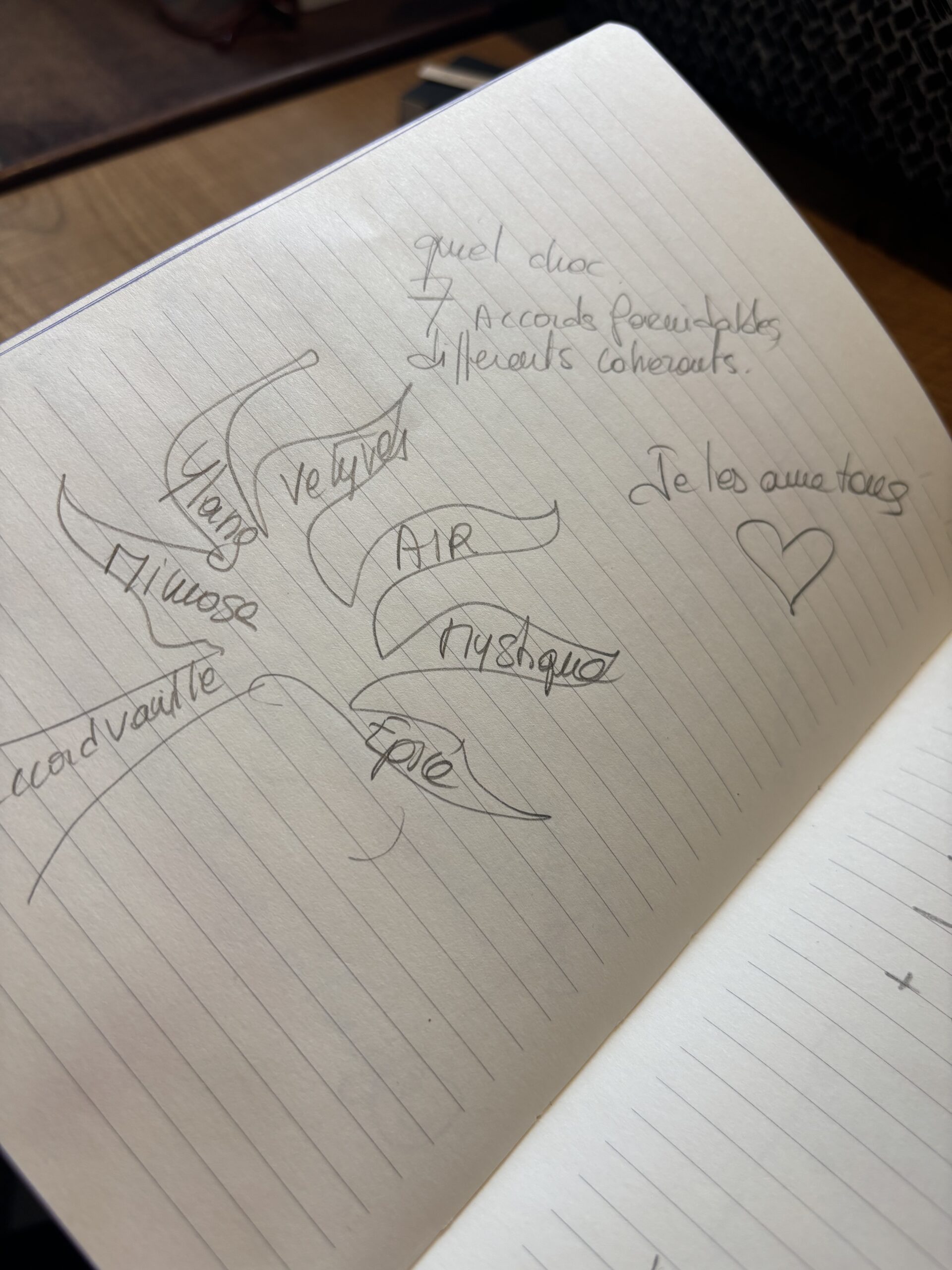
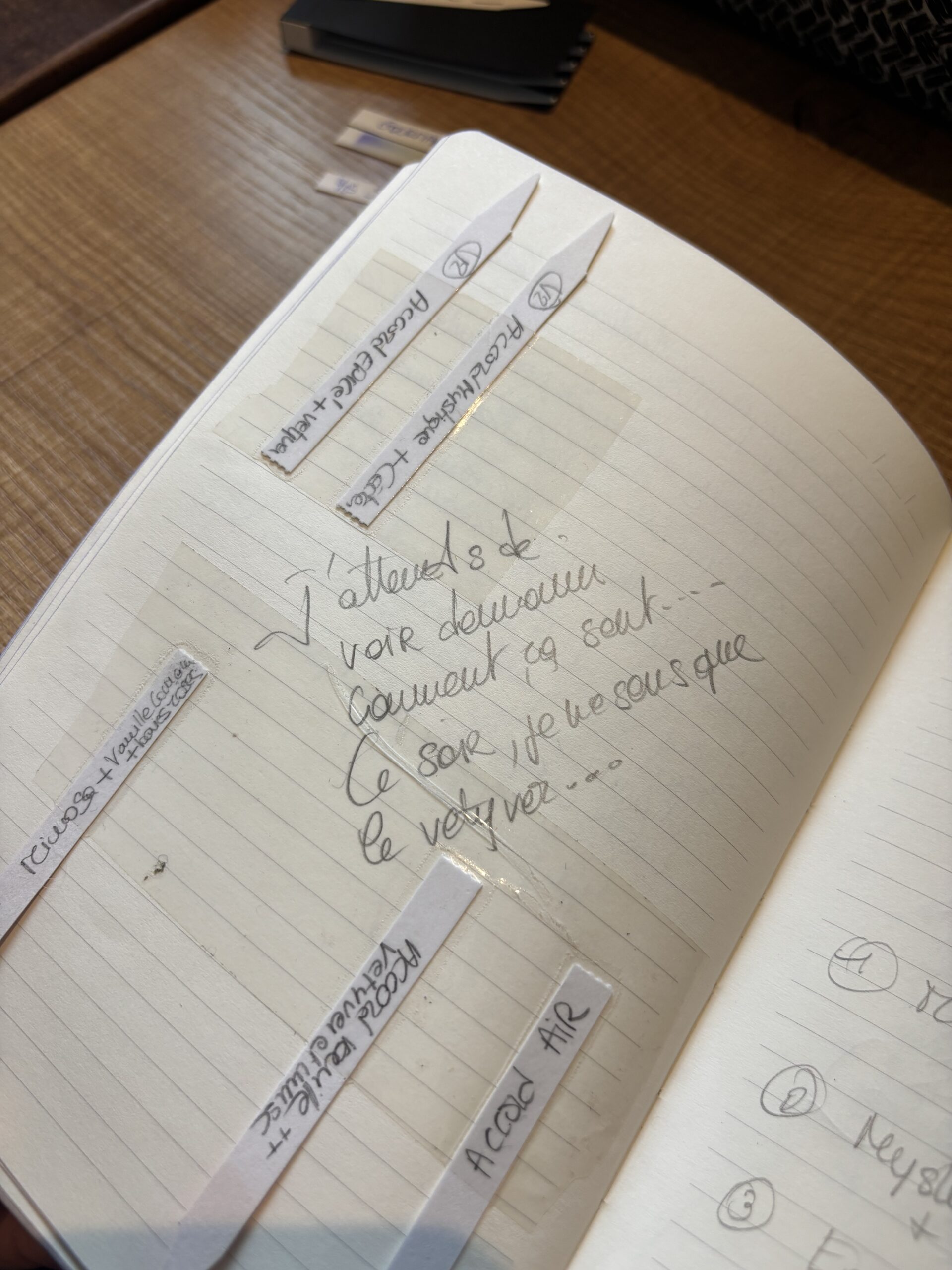
In between, I made just as many mistakes, spilled everything on my table, and ruined a lovely accord with too much vetiver or cardamom. I learned the hard way, though with humour, that some notes are very, very assertive while others remain discreet. They are like personalities that reveal themselves or fade into the background in company, expressing themselves in shouts or whispers.
In fact, I began to perceive, analyse and bring them together as though they really were living beings.
A project to share
Meanwhile, a small team came together to finalise the brand and its logo and create the project’s communication online and on social media — initially Instagram, then TikTok. Caiden and Olivier joined me, much to my delight.
(A project becomes a little more real when it is shared, doesn’t it?)
Together, we gradually created and produced material to explain the project’s development, step by step, from almost its very beginnings. It is an ongoing process that is only just starting. It will accompany the brand’s official launch and the sale of its products from 2027.
Some of our discussions have been fundamental to Oxymore.Paris’s identity and story:
the final choice of name and the trademark application,
confirming the website address and then the names of the social media accounts,
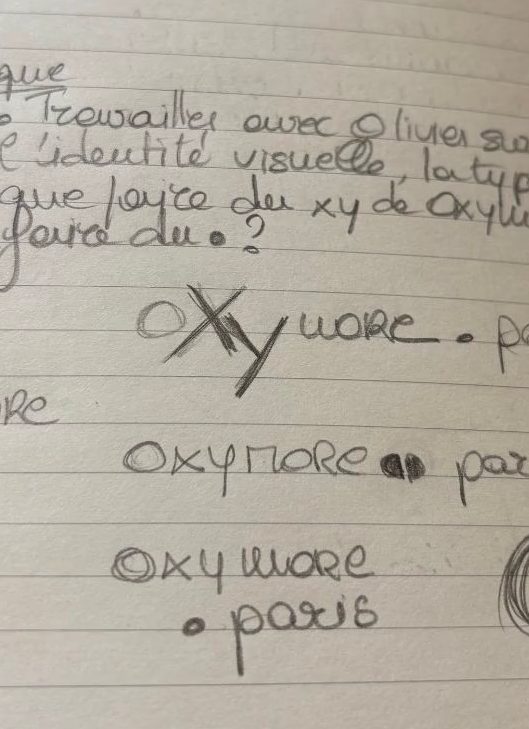
The logo and its variations
The logo, its story, its meaning, the hidden details we love, the origins of its typeface and its variations…
Exploring the second, pyramid-shaped logo and its colours.
packaging concepts and prototypes, bottle design, and the importance of an atomiser that delivers the fragrance fully and in a very fine mist,
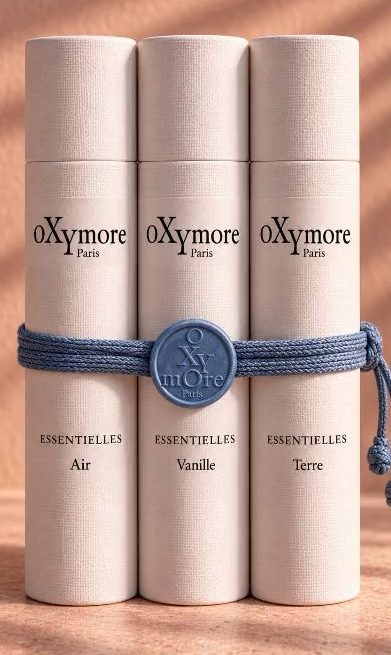
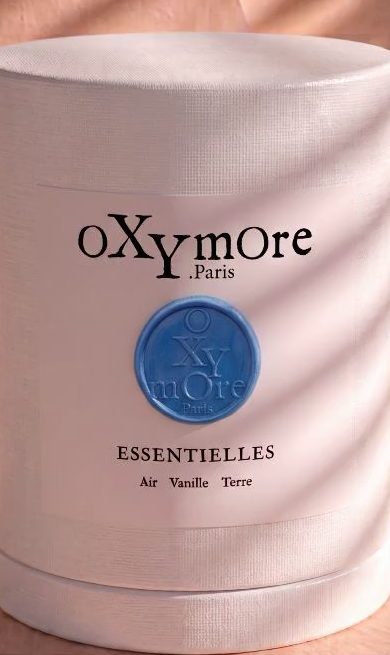
Packaging explorations — one stage of the project.
… 🙂
Here too, so many doors remain open and projects are still taking shape… Thankfully.
Finding the right trail
My handmade prototypes served as my benchmark, my reference point, my North Star.
When I briefed the industrial partner on an initial set of samples around the concept and the accords for the seven fragrances, I had only sent my written thoughts on the concept, notes, intentions and references.
And it was my homemade prototypes that I used to judge how closely the samples matched my original idea.
The first samples were a great disappointment to me. Enough to unsettle me and make me question the relevance of the entire project. For twenty-four hours. But still…
Nevertheless, I spent more than a week smelling, testing and analysing them closely, trying to understand them and connect them — in vain — with my initial intentions. The work was of good quality, but I did not recognise my project, the fragrance names — they had invented others — the materials used or the intentions behind the creations. That week ended with detailed feedback on every sample, both those that would continue into a second round and those that would leave the project immediately.
After a good conversation with PCW’s perfumer and her team, we agreed that if I had a precise project in mind, I needed to brief them precisely — fair enough… By sending my own samples with their exact formulas and a new detailed brief explaining not only what I had made, but the emotion and final result I hoped for: the materials I was missing, those I had overdosed, what I liked in my trials and what I wanted to improve…
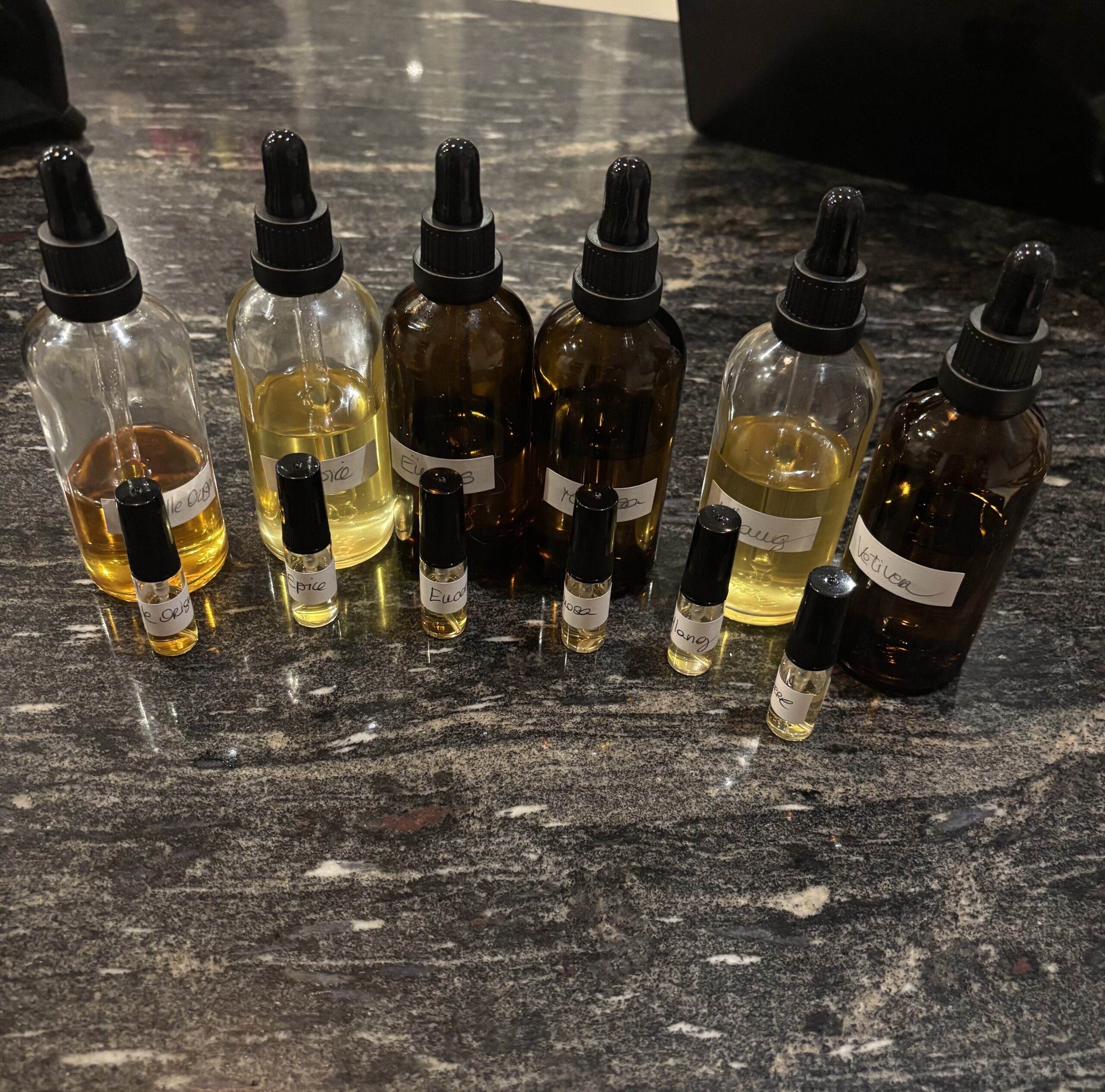
The aim of this feedback and rebriefing was to develop two kinds of proposal: one, as quickly and faithfully as possible, based on my samples; the other, redirecting their own work in light of my first impressions.
All with the idea that perfection — Oxymore.Paris’s kind of perfection — would emerge from the best possible combination of our respective work.
The first of these new sample deliveries arrived yesterday.
A delight.
My rough prototypes, now rounder, richer and more subtle.
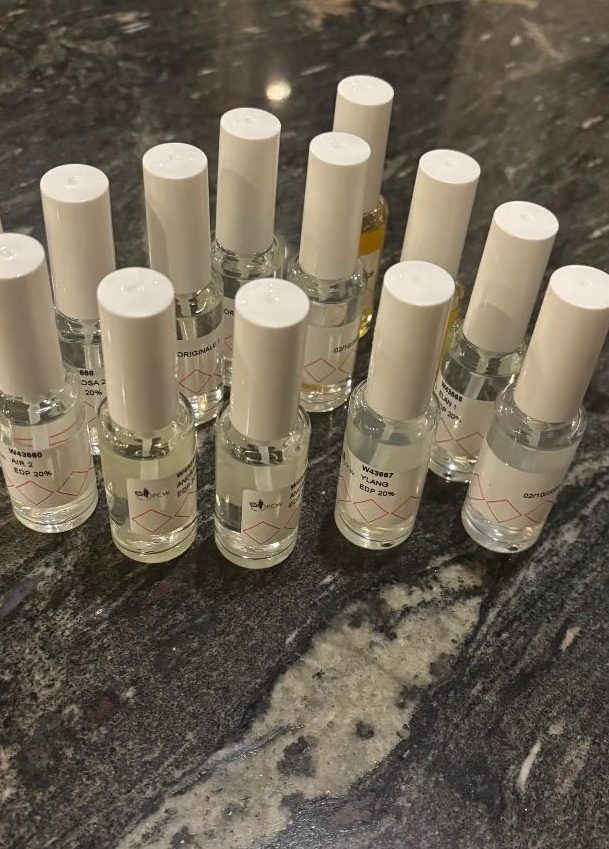
My dream is within reach!… There will be a hundred more discussions and hesitations, but now I know that in a few weeks, we will be discussing the trail of Oxymore.Paris together.